


THANK YOU FOR SUBSCRIBING


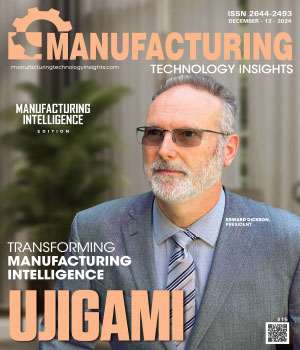
 EDWARD DICKSON, PRESIDENT
“We are at the forefront of transforming manufacturing intelligence,” says Edward Dickson, the president of Ujigami. “By integrating seamless connectivity, contextual data analysis, and real-time control, Ujigami’s system empowers manufacturers to maintain optimal operations and swiftly address any issues that arise.”
Ujigami’s system stands out due to its ease of deployment and seamless connectivity with every device and machine on the plant floor. The system is designed to be easily configured, ensuring that it gathers crucial information and exerts control over the manufacturing processes. Unlike traditional systems, where intelligence flows in one direction—from machine to human—Ujigami facilitates a two-way flow of intelligence. This empowers human operators to leverage their expertise and create an intelligent manufacturing environment. The result is a manufacturing process embedded with active controls and intelligence to ensure optimal operations at all times.
Contextual Data Analysis
A significant challenge in modern manufacturing is the sheer volume of data generated on the plant floor. Traditional systems often function as mere data repositories, collecting vast amounts of information without contextual understanding. The lack of context means these systems struggle to prioritize issues or provide actionable insights effectively.
The Ujigami system addresses this challenge by incorporating context into its data collection and analysis processes. By understanding the manufacturing flows and processes in real-time, it knows what needs to happen and whether the current conditions align with these requirements. This contextual awareness allows the system to invoke corrective actions precisely when needed, ensuring that deviations are promptly addressed. The context-rich approach enhances data mining efforts, allowing for a deeper understanding of anomalies and their significance.
“Acting as a conductor, we ensure that all components of the manufacturing process work in perfect harmony, leading to reduced downtime, enhanced quality, improved customer satisfaction, and better overall financial performance,” says Dickson.
Real-Time Control
One of Ujigami’s most remarkable features is its ability to perform real-time control and corrective actions. The system continuously monitors the plant floor, comparing real-time activities against predetermined specifications and processes. When discrepancies are detected, Ujigami immediately implements containment and corrective measures, minimizing downtime and preventing potential issues from escalating. This proactive approach ensures that manufacturing remains on track and that any deviations are immediately corrected.
Ujigami’s system excels in distinguishing between critical anomalies and mere noise. By understanding the intended manufacturing outcomes and continuously analyzing deviations from the norm, it provides actionable insights that are both timely and relevant. This capability is crucial for maintaining high standards of quality and efficiency in manufacturing operations.
Ujigami’s system doesn’t just react; it also collects and analyzes data to identify opportunities for improvement. By examining operational data, it helps detect patterns that might signal potential failures or areas where efficiency can be enhanced. This proactive approach allows technical teams to address issues before they escalate, minimizing downtime and maintaining smooth operations.
Manufacturing companies that implement Ujigami’s solution experience significant benefits. The real-time orchestration provided by Ujigami leads to a radical reduction in downtime and a remarkable improvement in product quality. As a result, customer satisfaction increases due to consistent, high-quality output and timely deliveries.

By integrating seamless connectivity, contextual data analysis and real-time control, Ujigami’s system empowers manufacturers to maintain optimal operations and swiftly address any issues that arise
The financial performance of manufacturing firms using Ujigami also sees a substantial boost. With fewer disruptions and higher quality products, companies can operate more efficiently and respond better to customer needs. The datadriven nature of Ujigami ensures that decisions are based on factual insights, leading to more effective and lasting corrective actions.
Ujigami’s Impact on Reshoring with Briggs & Stratton
The company has proven instrumental for manufacturers looking to enhance efficiency and maintain competitiveness despite shifting from low-cost to high-cost labor environments. A compelling example of Ujigami’s impact can be observed in the experience of Briggs & Stratton, a prominent engine manufacturer.
Briggs & Stratton, known for its premium commercial engines, faced significant challenges with offshore production. The primary motivation for offshoring was cost reduction, and the geographical distance led to critical supply issues. Long lead times, inflexibility in responding to customer needs, and substantial inventory management problems were hampering their operational efficiency and customer satisfaction. The company decided to reshore the production of its premium engines to better align with market demands and improve responsiveness.
However, reshoring came with its own set of hurdles, primarily the need to remain price-competitive despite higher labor costs. This is where Ujigami’s system came into play. The implementation of its advanced manufacturing environment was pivotal in transforming their operations.
One of the most remarkable outcomes of integrating Ujigami was the significant reduction in launch time. Originally planned to take much longer, the launch was completed in less than half the anticipated time. Ujigami software’s virtual hands-on assistance facilitated a shorter learning curve for operators, ensuring that the right parts were in the right place at the right time and that machines were correctly set up and functioning properly.
Ujigami’s strength lies in its data-driven approach. The system operates on a big data architecture, making data readily accessible to any engine or device that needs it. This open architecture supports a range of AI and business intelligence tools that can analyze and present data in actionable formats for engineers, technical personnel, and managers. Ujigami’s built-in reports and analytical features provide immediate insights into productivity, downtime, overall equipment effectiveness (OEE), firsttime yield, and overall quality levels.
By constantly evaluating variations and changes, Ujigami identifies critical factors that can impact manufacturing efficiency. The continuous improvement cycle is essential for maintaining high standards in a reshored production environment.
The Connectivity Bridge in the Era of Industry 4.0
As industries embrace this new era of advanced manufacturing, the need for seamless integration and communication between devices has become paramount. Ujigami addresses this challenge by providing unparalleled connectivity solutions that eliminate the dependency on evolving standards, thereby accelerating technological adoption and enhancing operational efficiency.
A core tenet of Ujigami’s mission is to serve as the connectivity bridge to all devices within the manufacturing ecosystem. With a wealth of new devices entering the marketplace, including advanced data sources and intelligent equipment, the potential for enhanced capabilities on the plant floor is immense. However, the true value of these technologies can only be realized through effective connectivity. Ujigami excels in this domain by enabling direct communication with every single device, sidestepping the need to wait for new standards to be established.
This approach is reminiscent of the challenges faced with Electronic Data Interchange (EDI) in the 1980s, where the industry sought a unified standard for data exchange. Today, Ujigami circumvents similar hurdles by offering native communication capabilities with all devices, ensuring that manufacturers can deploy existing and new systems without delay. The direct connectivity facilitates the integration of all data sources and provides a robust foundation for manufacturing intelligence and control.
By enabling direct communication with a diverse array of devices and data sources, Ujigami removes barriers to technological adoption and enhances manufacturing intelligence and control. As the industry continues to evolve at an accelerated pace, the company is well-positioned to drive innovation and help manufacturers achieve new levels of efficiency and productivity. Through its commitment to connectivity and control, Ujigami is not just keeping up with the growth of the industry; it is leading the charge into a smarter, more connected future.
Company
Ujigami
Management
EDWARD DICKSON, PRESIDENT
Description
Ujigami, a trailblazing company in this domain, takes manufacturing intelligence to unprecedented levels. Its innovative approach provides real-time knowledge of plant floor activities and integrates built-in intelligence, enabling smarter and more responsive manufacturing processes. Ujigami’s system stands out due to its ease of deployment and seamless connectivity with every device and machine on the plant floor.

Manufacturing Technology Insights Weekly Brief
Be first to read the latest tech news, Industry Leader's Insights, and CIO interviews of medium and large enterprises exclusively from Manufacturing Technology Insights
